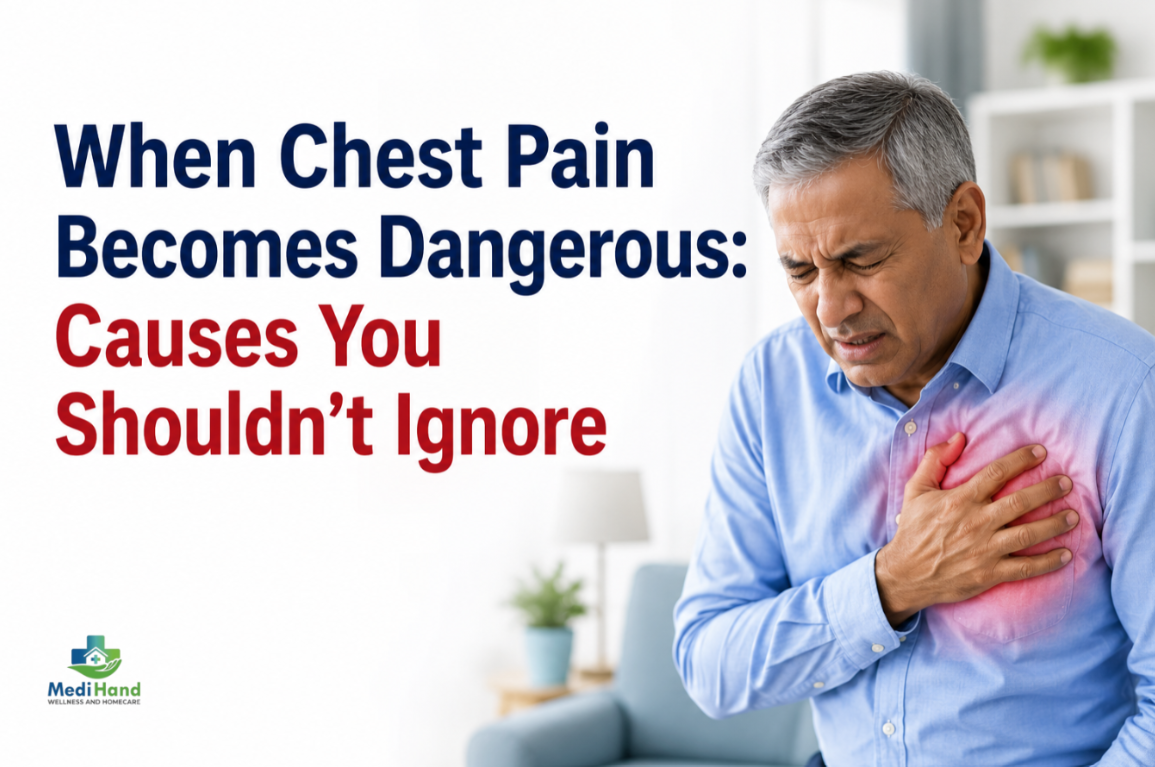
When Chest Pain Becomes Dangerous: Causes You Shouldn’t Ignore
Learn the common causes of chest pain, warning signs that require immediate medical attention, and how early diagnosis and home healthcare support can improve recovery.
When Chest Pain Becomes Dangerous: Causes You Shouldn’t Ignore
Chest pain is a common symptom that many people experience at some point in life. It may feel like pressure, tightness, burning, or a sharp pain in the chest. While not every case of chest pain is serious, it should never be ignored if it is severe, persistent, recurring, or occurs without an obvious cause. In some cases, chest pain may signal a serious problem involving the heart or lungs that requires immediate medical attention.
Understanding the possible causes of chest pain and recognizing warning signs can help ensure timely treatment and prevent life-threatening complications.
Warning Symptoms That Should Not Be Ignored
Chest pain becomes more concerning when it occurs along with any of the following symptoms.
- Sudden, severe, or crushing chest pain
- Pain spreading to the arms, neck, jaw, shoulders, or back
- Shortness of breath or difficulty breathing
- Cold sweating or dizziness
- Nausea or vomiting
- Irregular or rapid heartbeat
- Extreme fatigue or unusual weakness
- Chest pressure that worsens during physical activity
- Fainting or feeling like you may faint
If you experience chest pain along with any of these warning signs, seek immediate medical attention without delay.
Common Causes of Chest Pain
1. Heart-Related Conditions
One of the most serious causes of chest pain is reduced blood flow to the heart. This may cause pressure, heaviness, or discomfort in the chest and, in some cases, may indicate a heart attack. Symptoms such as sweating, difficulty breathing, or pain radiating to the arm or jaw require urgent medical evaluation.
2. Digestive Problems
Acid reflux, indigestion, and other digestive disorders can also cause chest pain. This discomfort often feels like a burning sensation and may become worse after eating or while lying down.
3. Muscle or Bone Strain
Chest pain may result from strained muscles, heavy lifting, exercise, or injuries to the chest wall. This type of pain usually becomes worse with movement or when pressure is applied to the affected area.
4. Respiratory Conditions
Lung infections, pneumonia, pleurisy, and other respiratory conditions can cause chest pain, often accompanied by coughing, fever, or difficulty breathing.
5. Anxiety and Stress
Panic attacks and severe anxiety can produce chest tightness, rapid heartbeat, and discomfort that may closely resemble heart-related chest pain.
When Chest Pain Becomes Dangerous
Chest pain should always be treated as a medical emergency if it is accompanied by any of the following.
- Sudden, severe chest pain
- Pain spreading to the arms, neck, jaw, or back
- Difficulty breathing or severe shortness of breath
- Heavy sweating and dizziness
- Nausea or vomiting along with chest pain
- Pain lasting longer than a few minutes or repeatedly returning
- Chest pressure that becomes worse during physical activity
These symptoms may indicate a serious heart or lung condition that requires immediate emergency medical care.
Why Early Medical Attention Matters
Ignoring chest pain can delay diagnosis and treatment, increasing the risk of serious complications. Early medical evaluation allows healthcare professionals to identify the underlying cause, begin appropriate treatment, and reduce the likelihood of long-term damage. Even when the cause is not serious, a medical assessment provides reassurance and helps rule out dangerous conditions.
Role of Medical Support and Home-Based Care
For elderly individuals and patients living with chronic heart or respiratory conditions, home healthcare services can provide valuable support during recovery. Trained nurses can monitor vital signs, assist with medications, assess symptoms, and ensure patients follow their prescribed treatment plans. This ongoing care can reduce hospital visits and improve overall health outcomes.
Preventive Tips for Better Heart Health
- Eat a balanced diet low in saturated and trans fats
- Exercise regularly as recommended by your healthcare provider
- Avoid smoking and limit alcohol consumption
- Manage stress through relaxation techniques and healthy habits
- Attend regular health check-ups
- Monitor blood pressure, cholesterol, and blood sugar levels
Final Thoughts
Chest pain should never be ignored, especially when it is sudden, severe, or accompanied by warning signs such as difficulty breathing, dizziness, or pain spreading to other parts of the body. While many cases are not life-threatening, some may indicate serious heart or lung conditions that require immediate treatment. Recognizing the warning signs, seeking prompt medical care, and following preventive measures can help protect your heart and support long-term health.